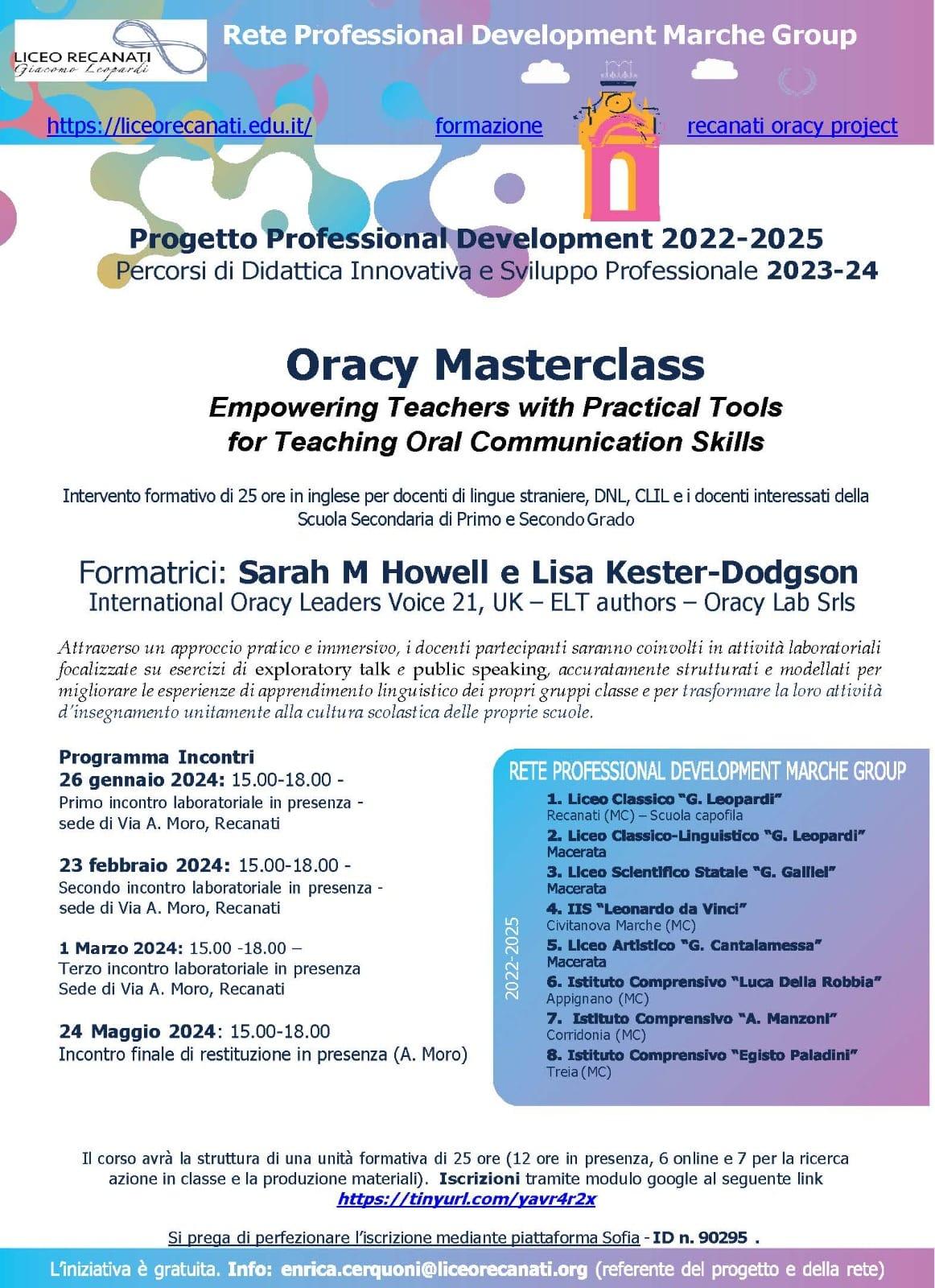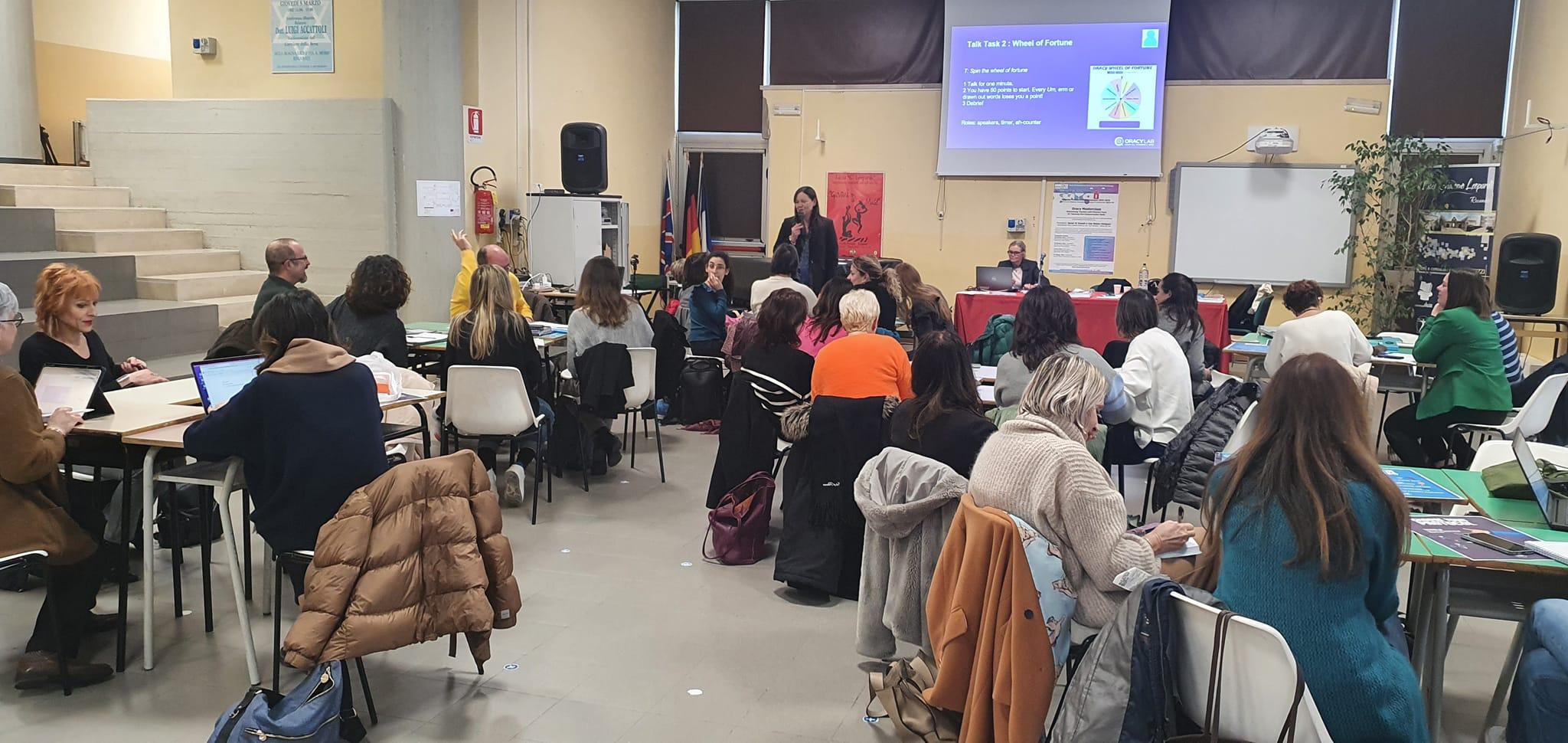
The Oracy Masterclass series kicked off at Liceo Leopardi in Recanati with the highly anticipated “Oracy Masterclass: Empowering Teachers with Practical Tools for Teaching Oral Communication Skills”. This session marked the beginning of a journey to equip educators with the tools to cultivate essential oral communication skills among their students.
Oracy, the ability to express oneself fluently and articulately through speech, is a vital skill that empowers students to effectively convey their thoughts, ideas, and opinions. By fostering oracy skills, educators can cultivate critical thinking, collaboration, and confidence in their students, preparing them for success in academic, professional, and social contexts.
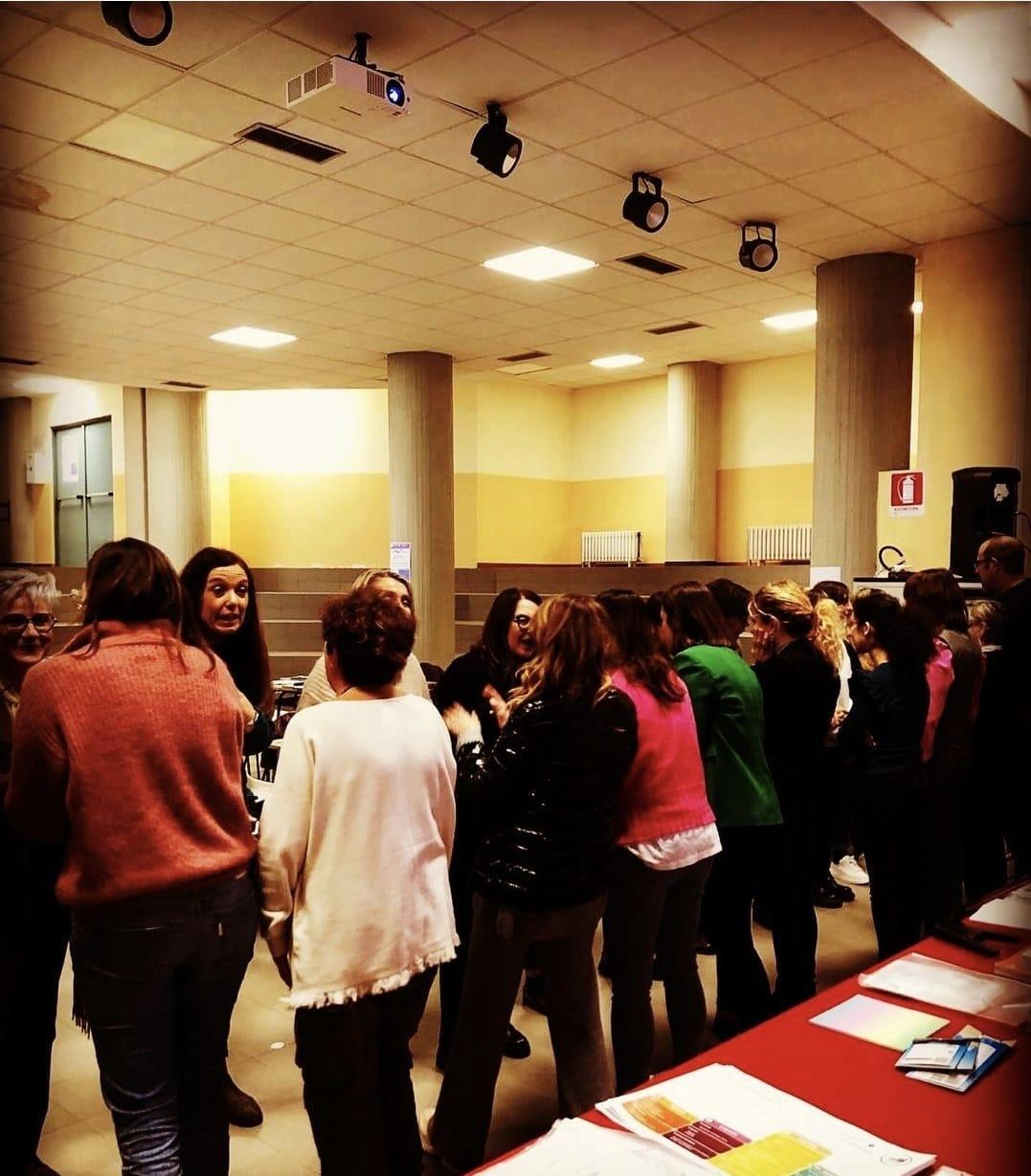
During the workshop, participants engaged in dynamic discussions and interactive activities designed to deepen their understanding of oracy pedagogy and its practical applications in the classroom. First, we started with a Traverse, a fun icebreaker where teachers formed a line, standing facing each other, and took turns asking questions to get acquainted.The Traverse is a grouping activity from Voice 21 that encourages collaboration and helps participants connect through asking each other questions and interacting in a structured way. Afterwards, they moved along and repeated the process, encouraging interaction and fostering connections among participants.
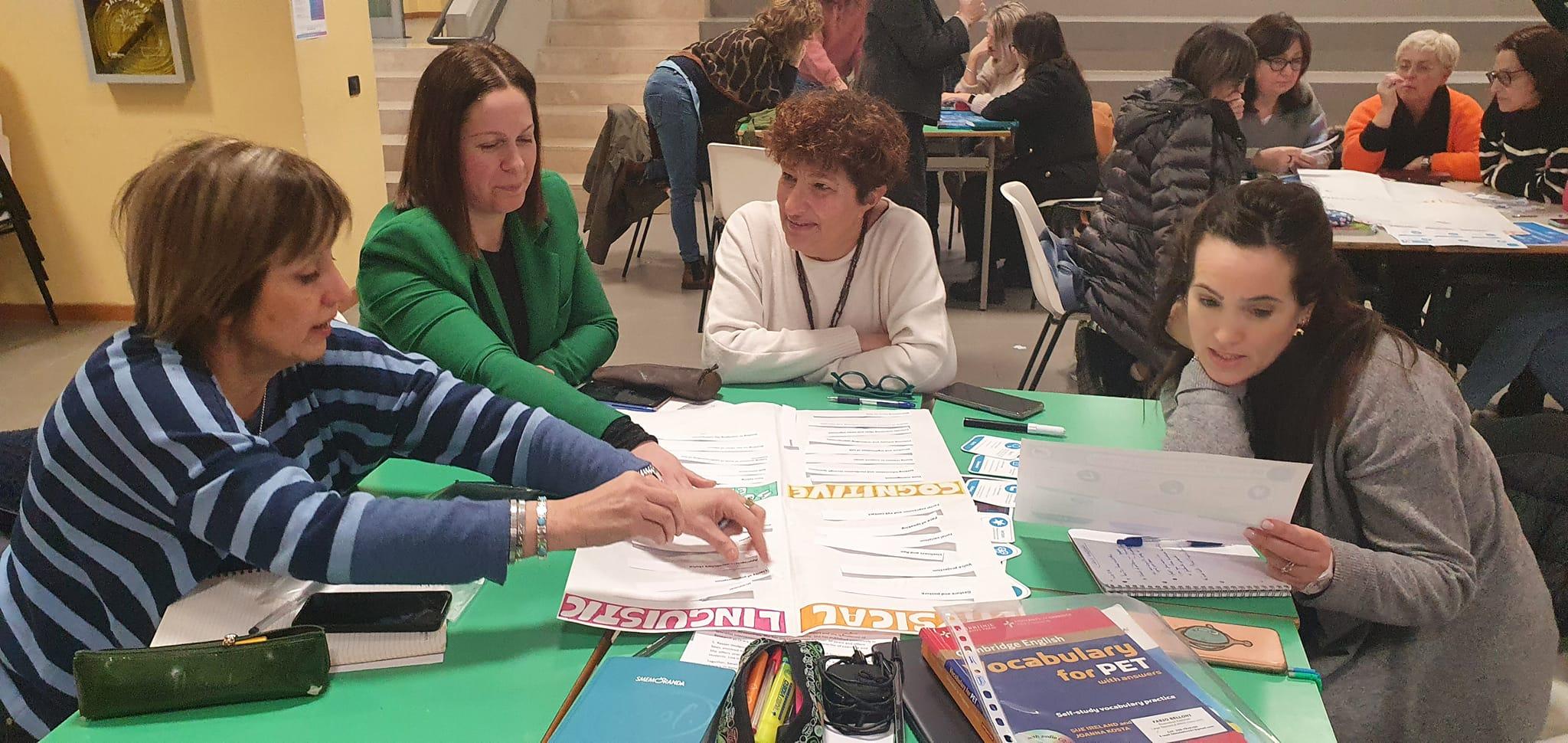
Then, we moved on to the main event: introducing the Oracy Framework. The Oracy Framework was developed by Voice 21 Cambridge and is recognized as a foundation in oracy education. It outlines four key strands: Physical, Linguistic, Cognitive, and Social-Emotional. These strands are essential for effective spoken communication in various contexts. We organised teachers into groups and provided them with posters that highlighted different strands of oracy, such as physical, cognitive, linguistic, and cognitive. Each strand covered various elements of communication skills. However, we kept the details a bit mysterious by only listing the main categories on the posters. To add an element of engagement, we prepared separate cards representing subtopics. Teachers were challenged to match these cards with the appropriate sections on the posters. This activity encouraged them to think critically about how different aspects of communication relate to each other within the framework.
Overall, our goal was to show teachers how the Oracy Framework can be a powerful tool for them and their students. By breaking down communication skills into different strands, we can better understand how to teach and improve them. This approach not only helps teachers become more effective educators but also empowers students to become confident and skilled communicators.
Feedback from participants highlighted the immediate impact of the workshop on their teaching practices and students’ learning outcomes. Educators expressed newfound enthusiasm for embedding oracy into their daily instruction, noting improvements in student engagement and communication proficiency.
Ready to join the movement and equip your students with the gift of powerful communication? Keep visiting our website or our social platforms to learn more about upcoming workshops and resources.